
Human Design for Parents: Meeting Your Child as They Are
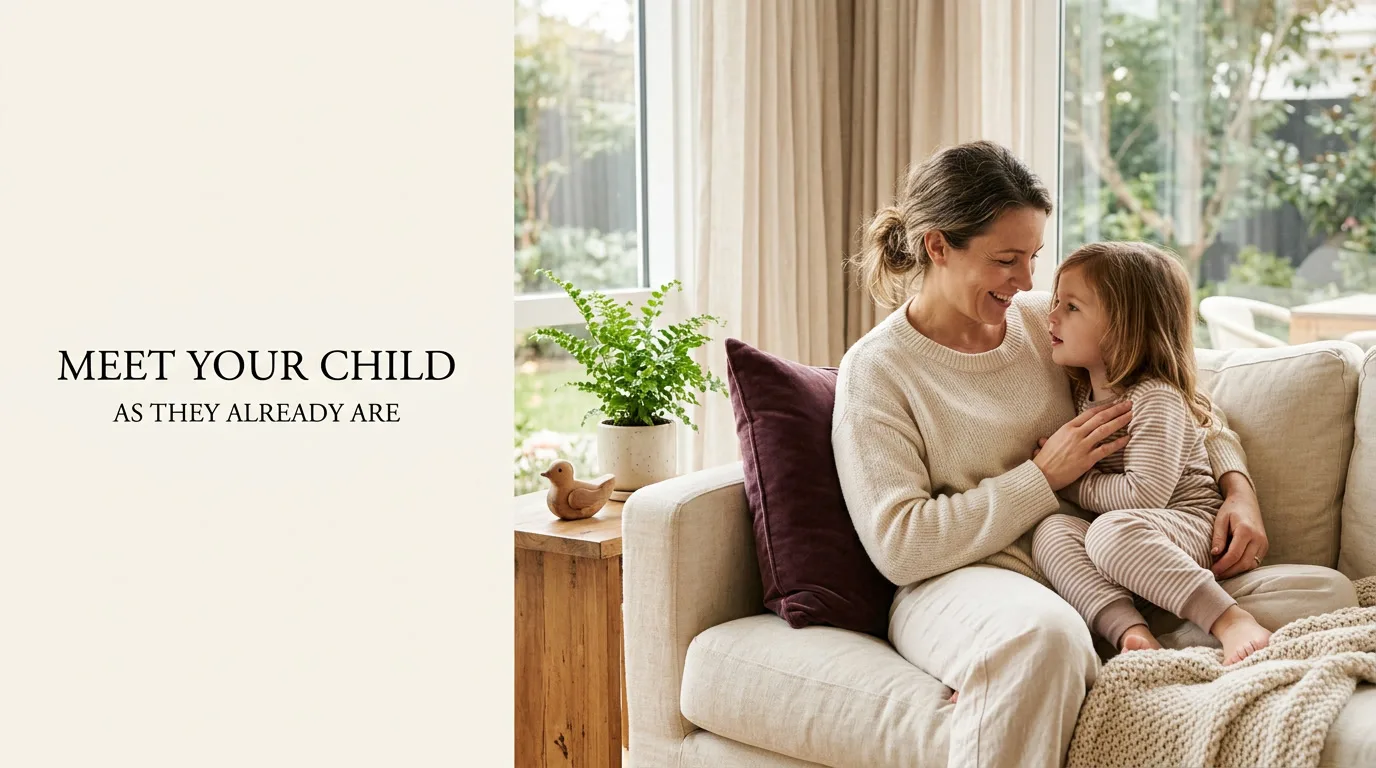
The child in front of you did not arrive as a blank page. They came with their own energy type, their own rhythm, their own way of making decisions, and their own sensitivity to the room they grow up in. Human Design can never tell you who your child should become, and that is not its job either. But it can give you a kind language for meeting the child who is already here, rather than the child you may have imagined. This piece is about using the system as a support in parenting, never as a label on your child.
Why Parenting Is a Lovely Place to Begin
Parents are often the most careful readers of Human Design, and there is a beautiful reason. When you love someone that much, you want to understand them, truly. And yet the most common question I get is this one: how do I do it right? The answer is not a method. It is a stance. Your child does not need to be correctly managed. They need to be seen. And seeing someone is exactly what Human Design is good at, when we use it gently. The foundation is in your type and strategy, and it applies to children just as much as adults, only at a smaller scale.
Your Child's Type, Not Yours
The first and most important step is to stop assuming your child runs the way you do. A parent with tireless Generator energy can be deeply puzzled by a Projector child who needs to rest after a while in a busy room. A Manifestor parent can grow frustrated with a child who wants to ask and wait before leaping in. Neither is doing anything wrong. They are simply built differently. Once you read your child's type on its own, not as an extension of you, many of the small daily clashes stop being about will and start being about rhythm.
Asking Instead of Steering
Your child's strategy is not a technique for getting them to obey. It is a clue about how they best enter into things. For some children that means they need to be asked and get to respond, rather than being told. For others it means they need information before they can land on a decision. If you build the habit of asking a question instead of giving an order, you may be surprised by how much less resistance there is. Not because your child has become more obedient, but because you are speaking to the way they are actually built.
Your Child's Authority
Just like you, your child has their own authority, their own way of reaching clarity. A Sacral child answers quickly and bodily, and often knows right away. An emotional child needs time, waves that have to settle before the answer stands still, and if you push for a yes too early you often get a yes that does not hold. This is one of the most practical places where parenting and design meet. If you want to understand the mechanics behind it, you can read more about your authority, and then look at your child's with the same curious eyes.
The Generator Child and Yes and No
A Generator child, with a defined Sacral, is made to respond. They flourish when they get yes and no questions, small and concrete, that let the body answer first and the mind catch up after. What feels fun? Do you want this or that? When a Generator child gets to stay with something they truly said yes to, they can work for hours and come out content, because the energy is self-sustaining. If they are instead pushed into things without getting to respond, the tiredness shows quickly, and that tiredness is not laziness. It is an answer.
The Projector Child and the Invitation
A Projector child is sensitive to how they are greeted, and they are made to wait for the real invitation, that open recognition that makes them feel welcomed. This does not mean you should leave the child alone with everything. It means you notice how they light up when they are genuinely seen, and how they withdraw when they are only directed. Projector children often need more rest than their peers, and giving them that rest without guilt is one of the finest gifts you can offer them.
The Manifestor and Reflector Child
The Manifestor child arrives with a will to set things in motion and a reluctance to be stopped mid-flow. They usually respond best to being informed, not told, and to owning their own direction within clear edges. The Reflector child, the rare and beautiful one, mirrors their whole surroundings and needs extra time, extra calm, and a warm environment to find their way back to themselves. For the Reflector especially: the child is not what you see in every moment. They are what remains once the room has settled.
The Environment Your Child Grows In
Children take in places as much as people. The room, the light, the sound, and the pace of a home shape a child far more than any of us tends to admit. If you notice where your child feels most like themselves, which rooms soften them and which make them restless, you learn something no book can tell you. It does not mean you have to rebuild the house. It means you can become alert to what your child actually needs in order to land, and give them more of it.
Open Centers and What Your Child Takes In
Children almost always have many open Centers, and that is part of why they are so impressionable. Your calm is contagious, and so is your stress. If you have read about open Centers and conditioning, you know the mechanism: what we carry around a child becomes the child's experience, long before they can put words to it. That is not a burden to know, it is a gift. It means that what you do with your own inner life is part of your child's environment, and that caring for yourself is, with a child in the house, also caring for the child.
When a Parent's Design and a Child's Clash
Some clashes are almost predictable. An emotional parent and a Sacral child can move at different tempos, one wanting to talk everything through, the other having already answered. A Projector parent with a Manifestor child can feel constantly surprised. Neither is wrong. The difference only becomes restful when both designs have room. The lovely thing about your relationships and a family's charts together is that you stop seeing the conflict as someone's fault and start seeing it as two buildings meeting.
Boundaries and Human Design
One of the most common misconceptions is that Human Design means you stop setting boundaries. The opposite is true. A child needs clear, kind edges, and understanding your child's design helps you set them in a way the child can take in. A Sacral child getting to respond does not mean they decide everything. A Projector child needing rest does not mean they skip their chores. Design is an explanation, not an excuse, and the finest parents I have met hold both at once: they are warm and they are clear.
Avoid Labels
Here I would ask you to be especially careful. Human Design is a language for seeing, not a verdict to place on a child. If a child hears that they are a certain way, they can start living up to the description instead of exploring themselves. Let the system be your background support, something you use to become more patient and more curious. Talk to your child about their strengths, not about their box. A child who feels seen without being summarised grows differently, and that is the gift you can actually give.
How to Find Your Child's Design
To see your child's design you need three things: their date of birth, their time of birth, and their place of birth. The time is the most important and the hardest, because even a quarter of an hour either way can shift a Center or a whole authority. If you do not remember the time, it is often in a birth letter, a hospital note, or the child's first record, and it is worth looking properly. Once you have the three details the chart takes only minutes to generate, and suddenly you hold a map of the small child you already know inside and out. It is a strange and lovely thing to see them in black and white.
Then take it slowly. You do not have to interpret the whole chart on the first day. Begin with the type, which gives you an immediate sense of what your child needs. Then look at the authority, because it tells you how your child best makes decisions, and it explains why some children know right away while others need to sleep on it. Finally, notice which Centers are open, because they say something about what your child takes in from their surroundings, and from you. It is a beautiful thing to see your child's inner landscape so early, and you never need to use it against them, only for them.
Siblings and Different Designs
If you have more than one child, you will discover they can be built in completely different ways, despite the same home and the same parents. One child may need to move and respond to everything, another may need long stretches alone and plenty of time before they know what they think. It is easy to compare them, which is exactly why it is so valuable to understand their differences. One child is not easier or harder than the other. They simply need different things, and you can give each of them what fits them, without anyone being neglected.
It also means the same parenting strategy can work for one child and go straight against another. Telling a Sacral child to decide quickly can be wrong for an emotional sibling, who does better when they get to sit with it. Understanding both designs does not make you a more complicated parent, it makes you a more precise one. You get to stop guessing, and stop blaming differences on will or upbringing. Your children are not disagreeing about who they are. They are simply different, and that is the whole point.
A Gentle Closing
You do not need to become an expert to use any of this. You only need to become a little more curious about the child you already love. Begin by looking at your charts together, yours and your child's, and notice where you are alike and where you are beautifully different. If you would like company through a family's charts, a personal reading is a gentle way to do it.
And if you do not have the charts yet, the simplest first step is only a click away. Generate your free chart and see who you both already are. Let your child be exactly who they are. That was all they ever needed.
How I Can Help
Four ways to explore and live your Human Design, whether you're new or ready to go deeper.


Curious about your own design?
Generate your free Human Design chart and discover your Type, Strategy, and Authority, the first step toward living in alignment with who you truly are.
Get Your Free Chart